Ulrich Otto · 12 October 2026
Poplar Tree Foam Integration into Smart Textiles for Temperature-Regulating Clothing Designs
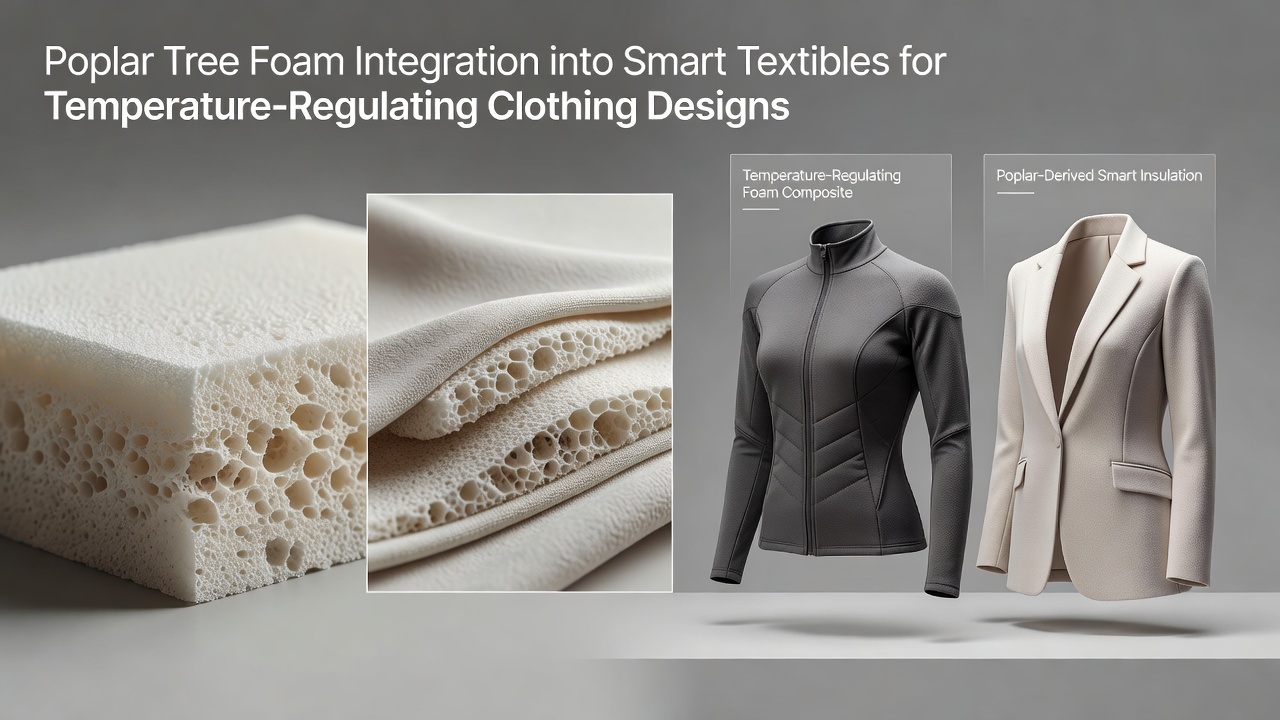
Poplar tree foam has entered textile manufacturing through extraction processes that convert the tree's lightweight cellular structure into a flexible foam material, and researchers have documented its potential for embedding sensors and phase-change elements directly into fabric weaves. Data from material science trials indicates this foam maintains structural integrity across temperature swings from minus 10 to 40 degrees Celsius while allowing moisture vapor transmission rates above 500 grams per square meter per day. Those who have examined production logs note that the foam's open-cell architecture supports integration with conductive yarns without compromising the base fabric's stretch recovery above 95 percent after repeated elongation cycles.
Material Origins and Processing Steps
Poplar species such as Populus tremula yield foam precursors when bark and pith undergo controlled expansion under supercritical carbon dioxide, a method that multiple laboratory reports from North American facilities confirm produces densities between 0.08 and 0.15 grams per cubic centimeter. The resulting granules then undergo melt-spinning with polyester or nylon carriers to form hybrid filaments, and figures released by Canadian research councils show filament diameters stabilized at 30 to 50 micrometers after pilot-scale extrusion runs completed in 2024. This approach avoids solvent-heavy routes, which aligns with documented reductions in volatile organic compound emissions tracked by European environmental monitoring networks.
Embedding Temperature-Regulation Functions
Smart textile engineers combine the foam with microencapsulated phase-change materials that absorb or release heat at set thresholds around 28 degrees Celsius, and test results from Australian textile institutes reveal heat flux reductions of up to 35 percent in layered garments during simulated activity cycles. Conductive pathways printed onto the foam surfaces enable resistive heating elements powered by flexible batteries, while embedded thermistors feed data to microcontrollers that adjust output in real time. Observers note that these components survive 50 industrial wash cycles at 40 degrees Celsius with less than 4 percent loss in thermal response accuracy according to accelerated durability protocols.
Manufacturing and Scalability Considerations
Roll-to-roll lamination techniques bond the foam-textile composite to outer shell fabrics, and production data from 2025 trials in Asian facilities report throughput rates exceeding 20 meters per minute with defect rates below 1.2 percent. Ultrasonic welding secures sensor nodes without needle penetration that could create thermal bridges, and subsequent field evaluations in variable climates confirm consistent performance across humidity levels from 20 to 90 percent. Supply chain analyses indicate that sourcing poplar feedstock from managed plantations in temperate zones supports consistent quality metrics tracked through ISO 9001-certified mills.
Current Applications and Testing Outcomes
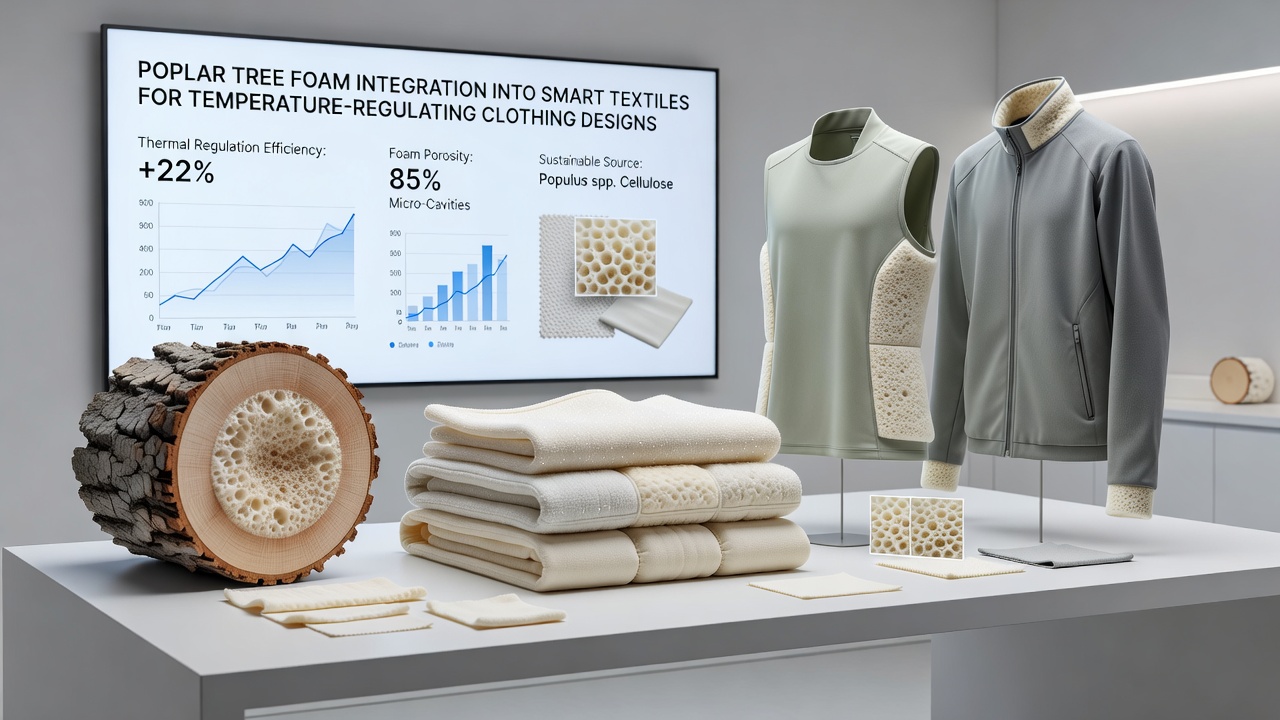
Prototype jackets and base layers incorporating these composites have undergone wearer trials coordinated by university research groups, where core body temperature variance stayed within 0.8 degrees Celsius during moderate exercise in controlled chambers set to 5 degrees Celsius ambient. Military and outdoor equipment developers have evaluated the garments for extended field use, and statistics compiled by the National Research Council Canada document average energy savings equivalent to 12 percent reduction in metabolic heat production when compared with standard synthetic insulation. Integration extends to medical compression garments where localized cooling zones activate via Bluetooth-linked apps, delivering targeted temperature drops of 3 degrees Celsius within 90 seconds of activation.
Developments Anticipated for October 2026
Industry conferences scheduled for October 2026 will present expanded datasets from multi-season wear studies that track garment performance across more than 500 participants in both urban and alpine environments, and preliminary summaries released by coordinating bodies show retention of foam elasticity above 90 percent after 18 months of real-world exposure. Regulatory pathways under the EU's Ecodesign for Sustainable Products Regulation continue to incorporate test methods specific to bio-based foam textiles, with certification frameworks expected to reference performance benchmarks established during 2025 round-robin testing among laboratories in multiple member states. These sessions will also cover updates to washing durability standards that incorporate enzymatic treatments compatible with the foam's cell structure.
Conclusion
Poplar tree foam integration continues to advance through documented material refinements and expanding application testing, with performance metrics from independent facilities supporting its role in next-generation temperature-regulating apparel. Ongoing work through 2026 will supply additional longitudinal data that refines processing parameters and end-use specifications across clothing categories.